01
Feedstock receiving and preparation
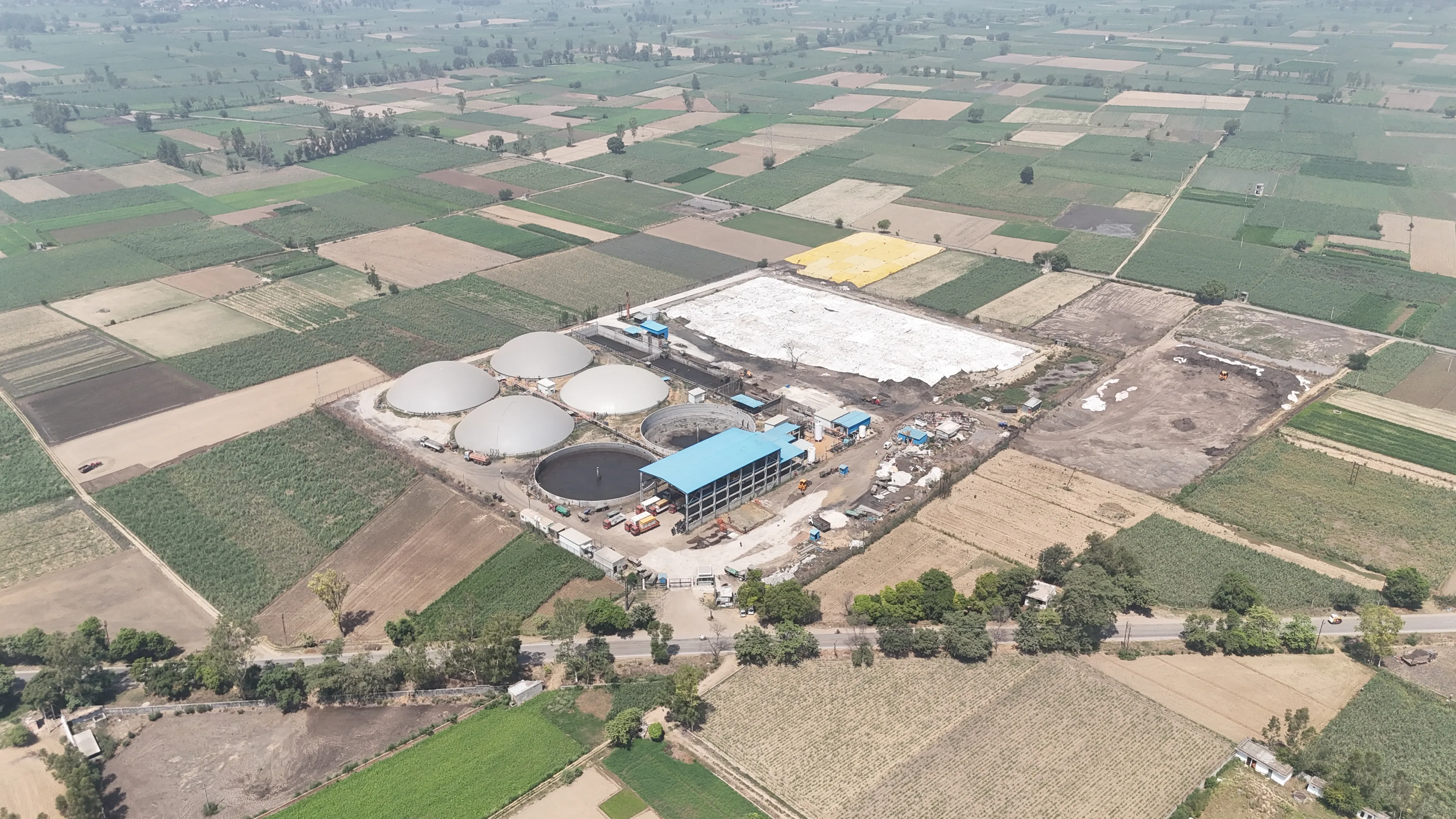
Pressmud arrives by truck and trolley from regional sugar mills within a ~60 km radius of the plant. Cattle manure is collected from local dairies and goshallas across Meerut District. Both are weighed at the on-site weighbridge and blended with borewell water in equalisation tanks to a target ~12% solids slurry.
02
Anaerobic digestion
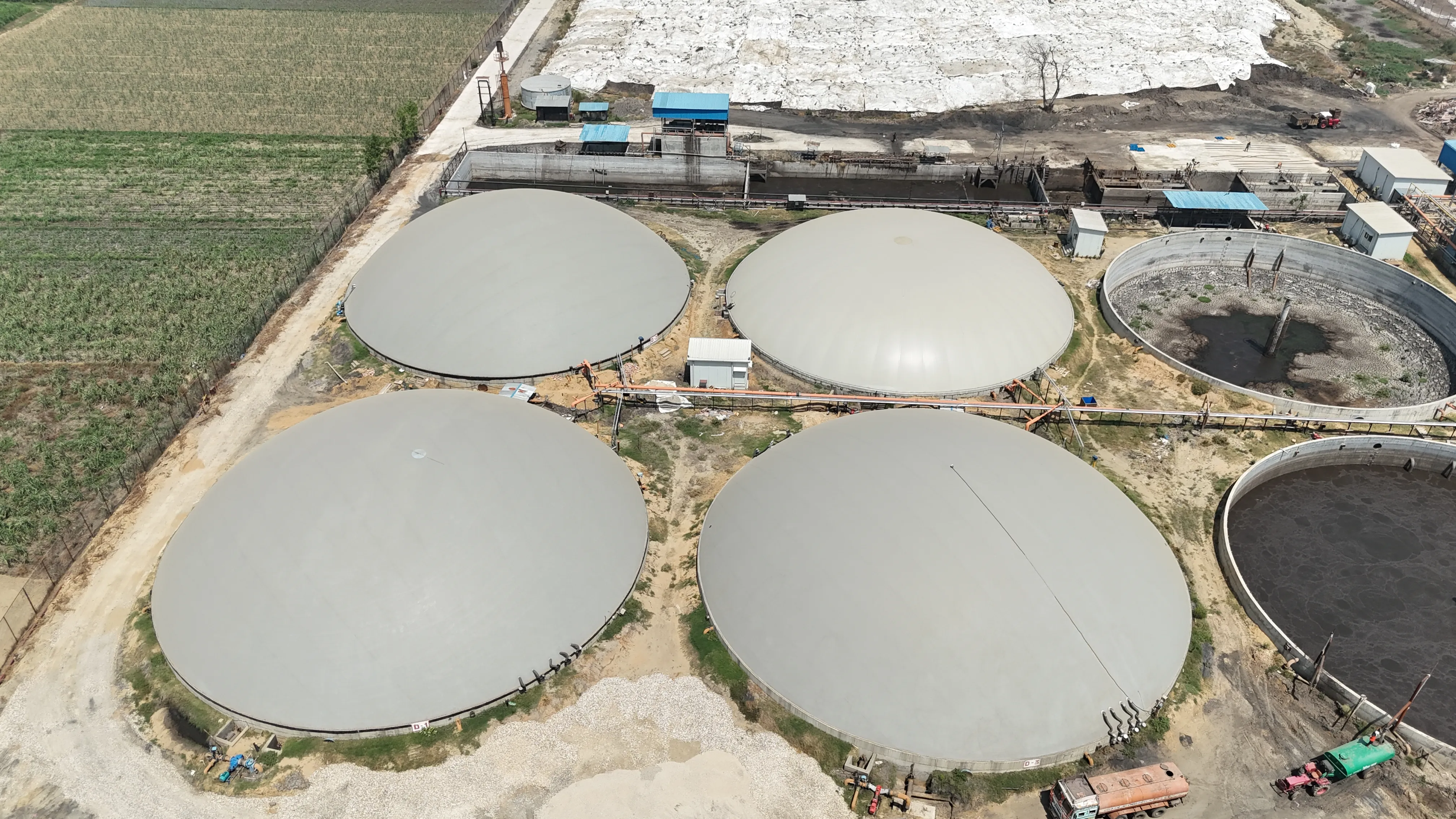
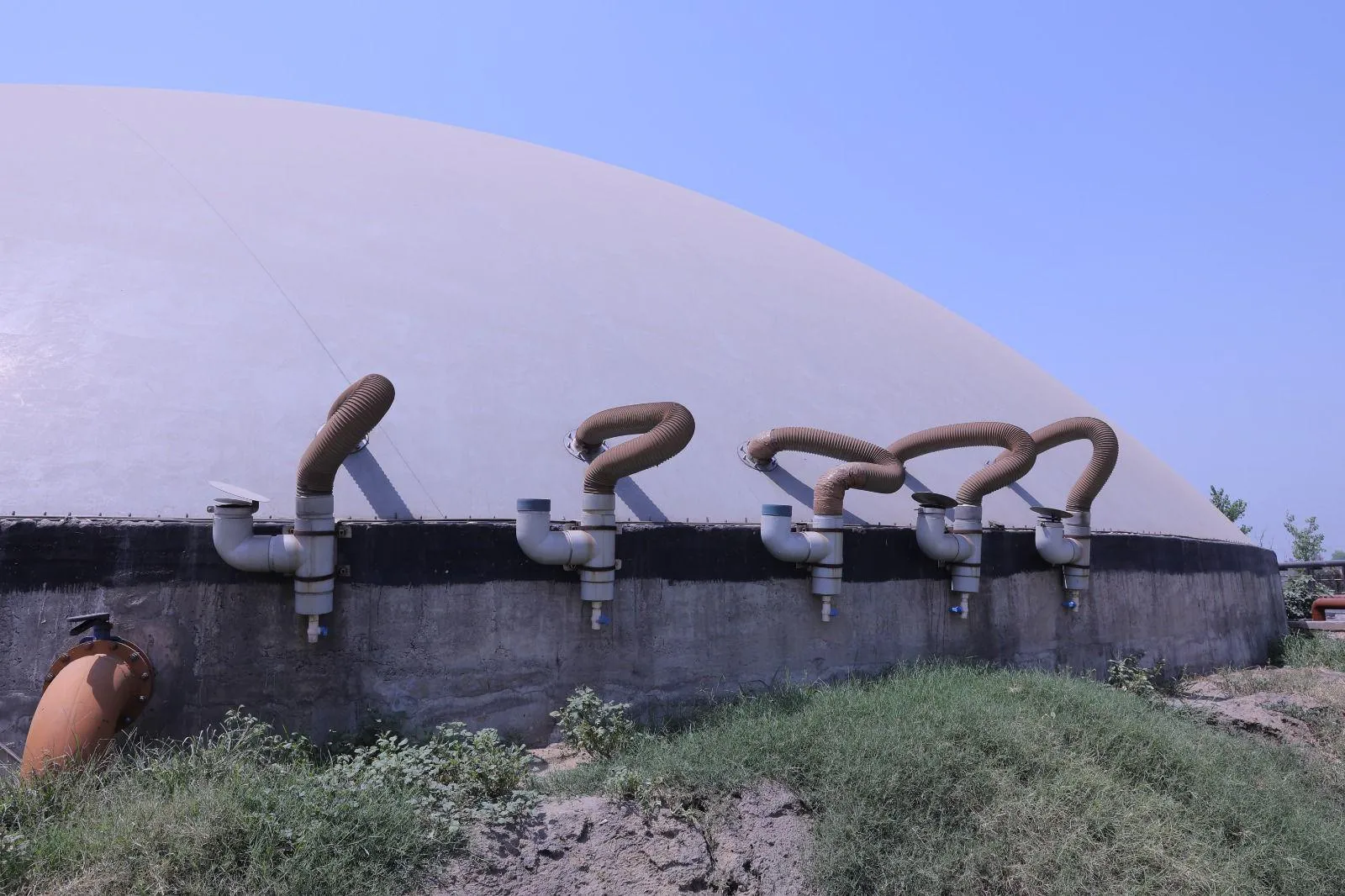
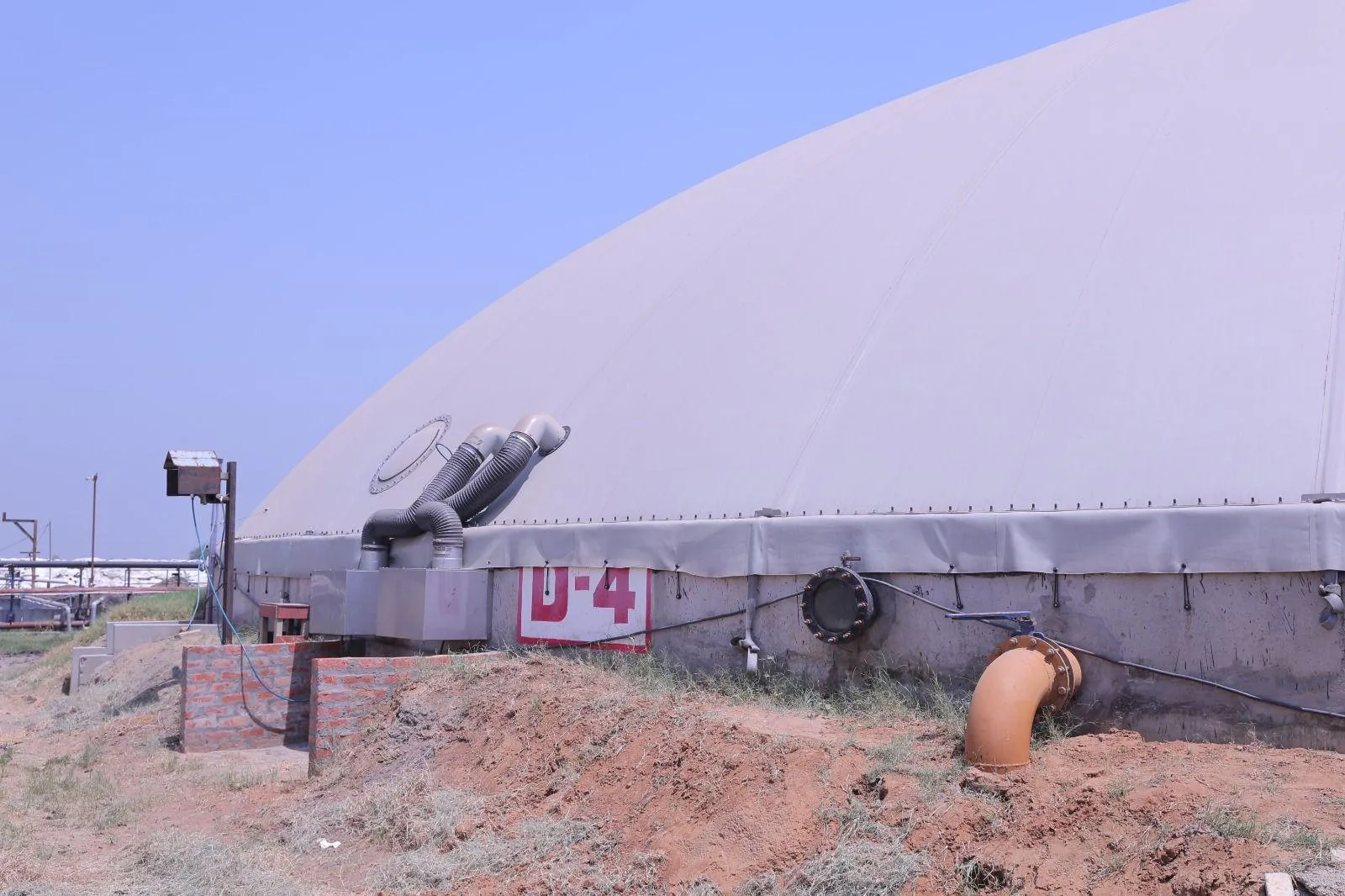
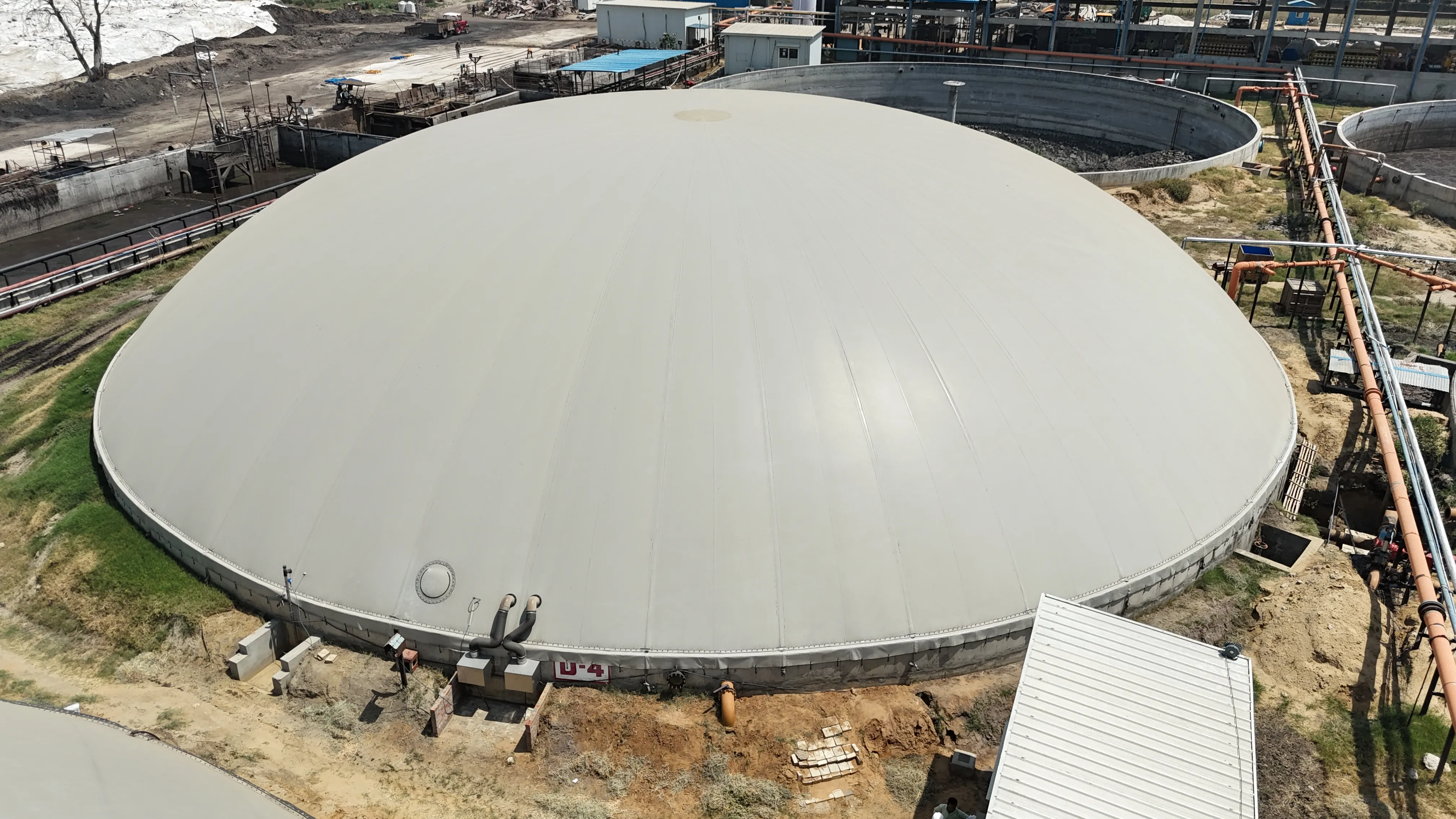
The conditioned slurry feeds covered mesophilic digesters operating around 30 °C. Continuous mixing keeps solids in suspension while micro-organisms break down organic matter into raw biogas, captured under double-membrane gas holders.
03
Pre-treatment and gas cleaning
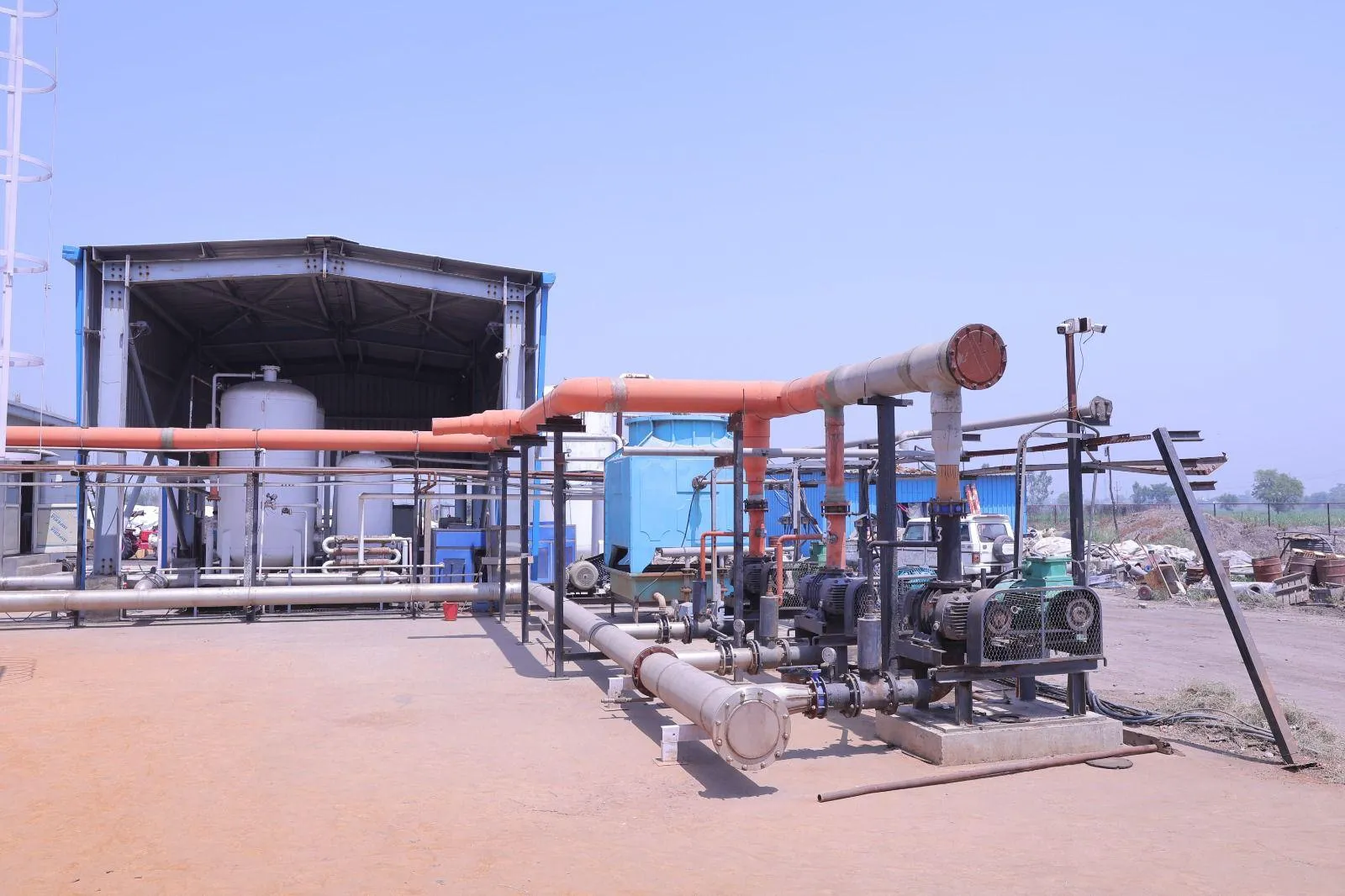
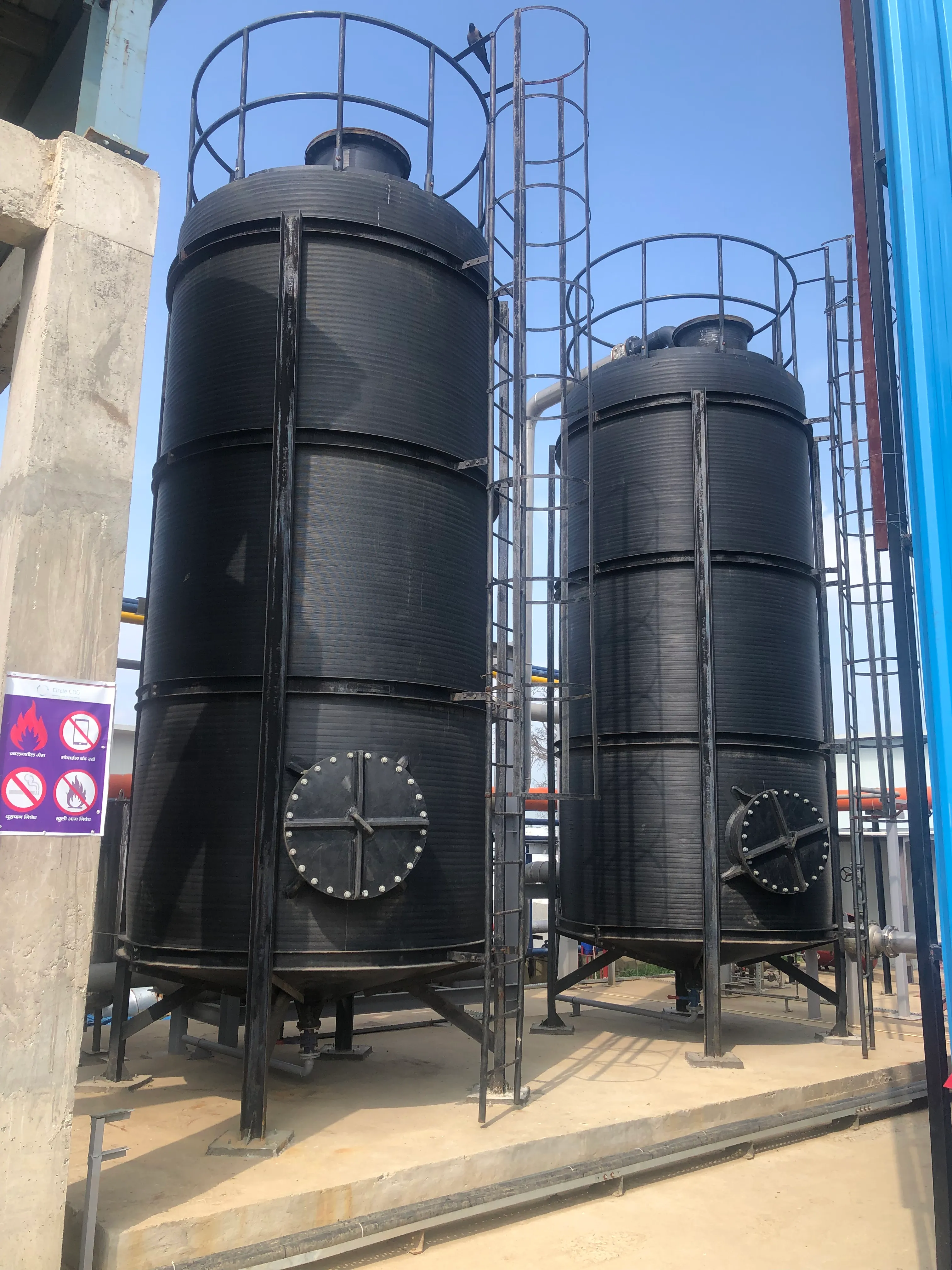
Raw biogas passes through desulfurisation vessels for H₂S removal, then through chilled heat exchangers and an activated-carbon polishing bed to drop moisture and trace VOCs to membrane-safe levels.
04
Membrane upgrading to pipeline-quality CBG
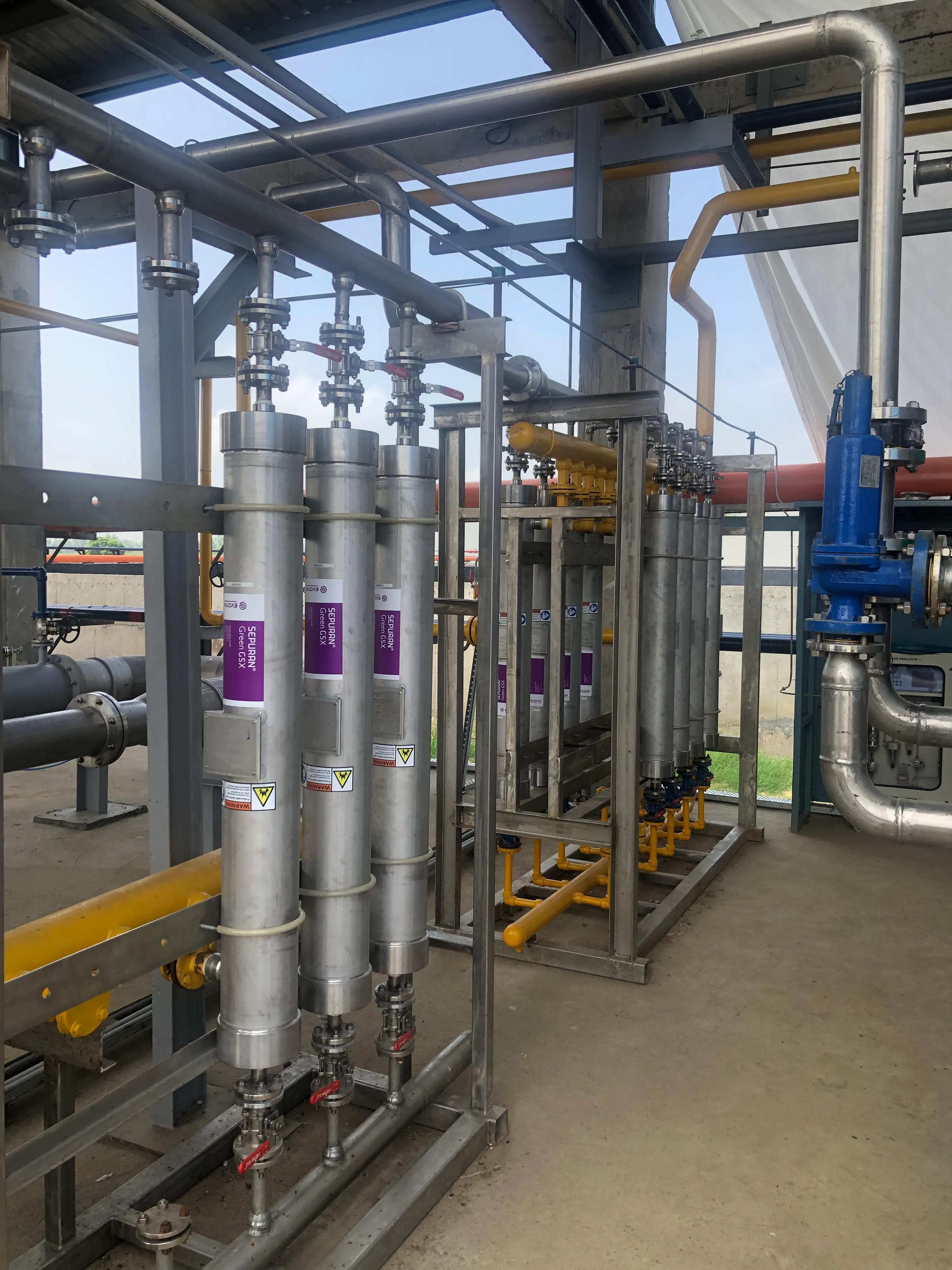
A two-stage hollow-fibre membrane skid separates methane from CO₂, lifting CH₄ from ~60% in raw biogas to 96–97%+ in the product stream, well above the BIS 16087 specification for vehicle-grade CBG.
05
Compression, storage, and dispatch
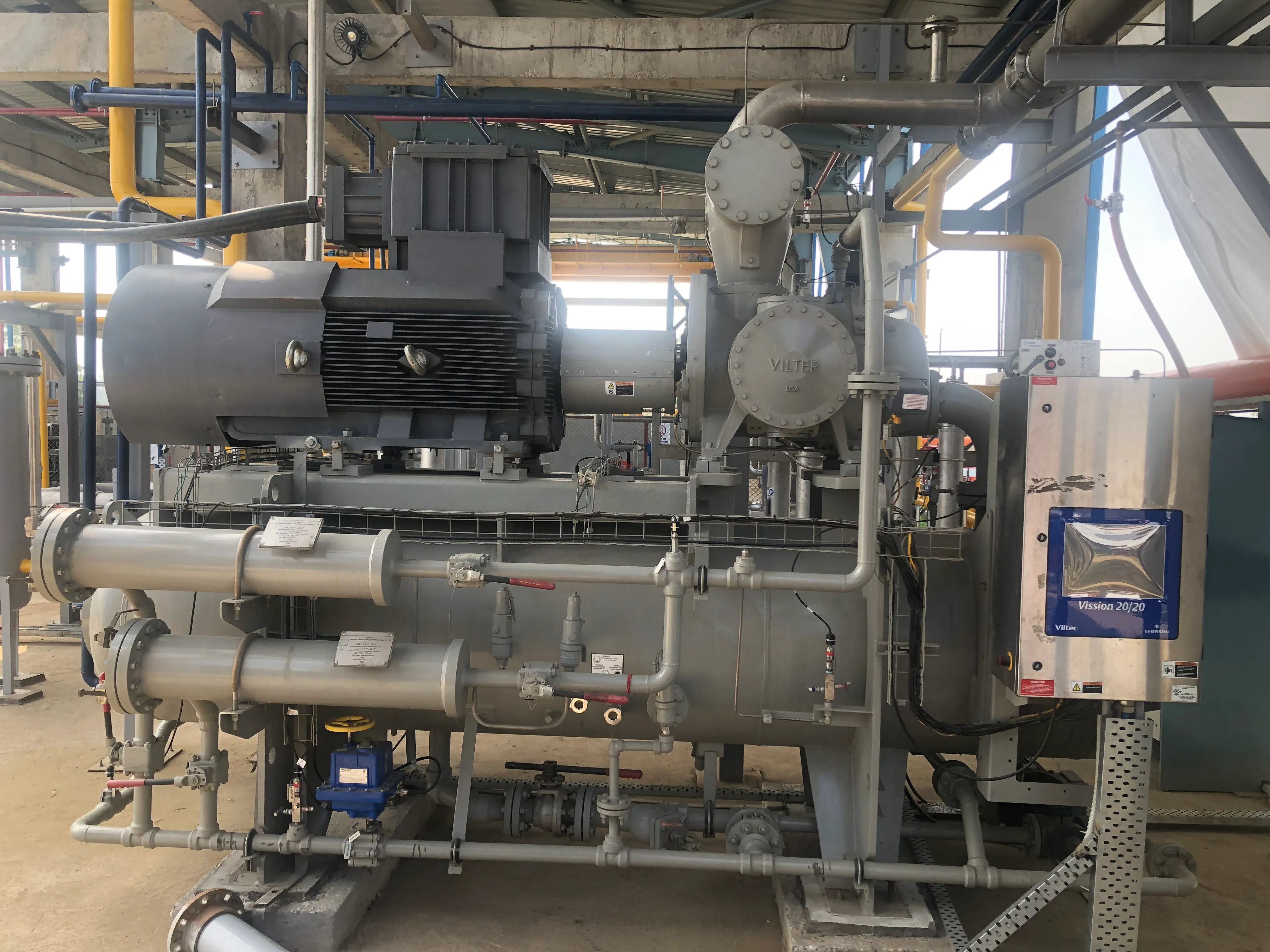
A multi-stage high-pressure compressor train fills an on-site stationary cascade and mobile cascades for delivery across the National Capital Region under SATAT, with cascade-based injection into city-gas pipelines. Digestate is dewatered into fermented organic manure (FOM/LFOM) sold to farmers.